In Ireland & Scotland there are many different fairy mounds all over the country sides and valleys. All of these date back to the 31B.C.
 |
| Beehive Mound |
 |
| Beehive Mound |
 |
| Beehive Mound |
 |
| Dingle Peninsula of Ireland |

 |
| Dingle Peninsula of Ireland |


Just because you can't see the magical creatures of the world doesn't mean there aren't there. They have always' been.That's where the magic is! Right in front of your Eyes...
|
| Beehive Mound |
|
| Beehive Mound |
|
| Beehive Mound |
|
| Dingle Peninsula of Ireland |
|
| Dingle Peninsula of Ireland |
 |
| Ghillie Dhu |
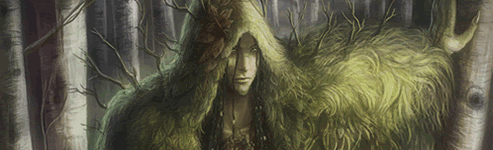 |
| Ghillie Dhu |
 Dryads & Oreides were the beautiful Nymphs of the trees, groves, woods and mountain forests. They

 2) The Oreiades were the Nymphs of the mountain conifers. The first of these were offspring of the five Daktyloi and the five Hekaterides. Note: These are the descendants of the elder Oreiades and their brothers the Satyroi's.
 The Greek gods put them into these different groups- 1) Nymphs of mountains and grottoes which were called - Orodemniades and Oreiades at the times of the ancients. 2) Nymphs of forests, groves and glens were believed sometimes to appear to and frighten solitary travellers. 3) Nymphs to trees were believed to die together with the trees which had been their abode, and with which they had come into existence. They were called Dryades, Hamadruades or Hadryades.
 EKHO A Oreiad nymph of Helikon in Boiotia, and a handmaiden of the goddess Hera. She was cursed to only repeat the words of others by her mistress. When she fell in love with the self-obsessed youth Narkissos, he spurned her advances, and she faded away in her grief.


 The Faerie dragons are quite small, they are actually the size of your average house cat. ( you may wonder why I compared them to a house cat? Well you will see why later on in my post).


 The venom is only enough to numb a small area upon each bite, however, such as a hand, or a joint being bitten many times could be a deadly bite you could say. Although the species is recorded as being mostly friendly and docile it will use its venomous bite in a final line of defence.


